

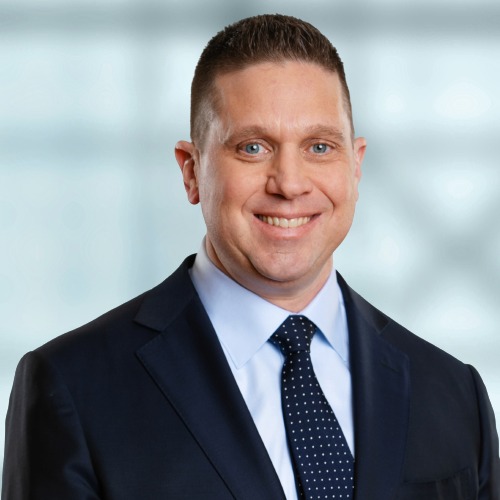


“People who work in rehabilitation are special. They’re not in it for the glory. They’re humble and motivated by a desire to help others,” says KITE Director Director Dr. Milos R. Popovic.
How UHN's KITE Research Institute became the world leader in rehabilitation science and real-world implementation.
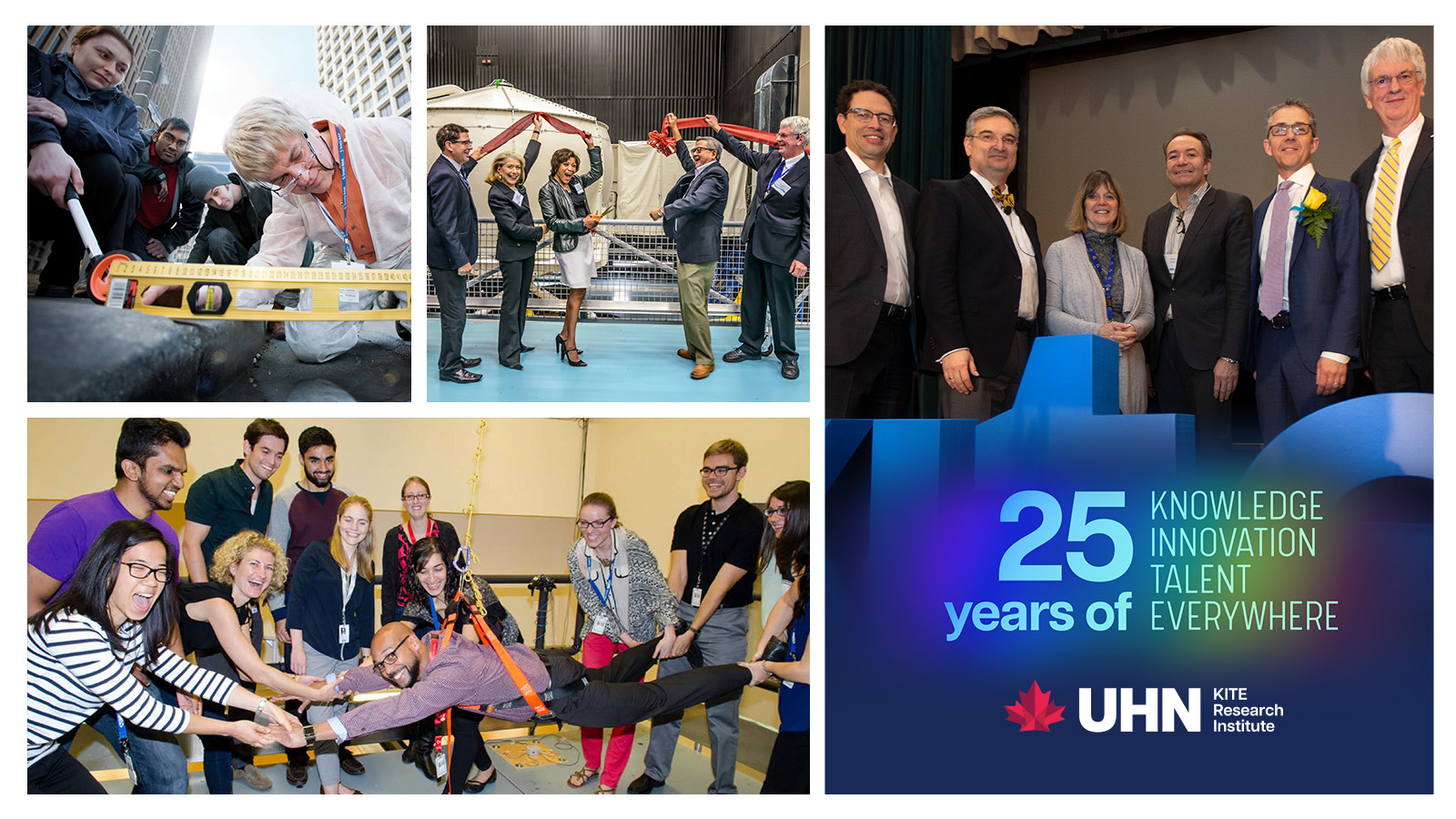
This year, UHN’s KITE Research Institute celebrates 25 years of research and innovation – that’s 25 years of developing cutting-edge medical devices, improving rehabilitation, and advancing global knowledge on how to support people recovering from the effects of injury, illness and aging.
Over the past quarter-century, KITE has grown into the number one rehabilitation science institute in the world, with around 130 investigators, more than 300 trainees, and almost 200 staff innovating new products and leading more than 600 studies a year.
But its focus remains the same as it was on day one: To make groundbreaking research that goes beyond the lab to improve lives, whether that’s preventing the need for rehab in the first place through injury prevention, changing legislation or partnering with groups such as the World Health Organization to fight for a more accessible world.
This success comes down to the exceptional talent and culture at KITE, says Director Dr. Milos R. Popovic. “People who work in rehabilitation are special. They’re not in it for the glory. They’re humble and motivated by a desire to help others,” says Dr. Popovic.
“Plus, they all have very different backgrounds. Scientists, engineers and health care providers work together and ask, ‘How can we take existing tools – or invent new tools – to address the need, to solve the problem, to help the patient?’”
World-leading simulation laboratories and cutting-edge technology come to KITE
In 2001, the Toronto Rehabilitation Institute officially launched its research arm – now known as KITE – with a $15-million commitment from the Ontario Ministry of Health and Long-Term Care. The first director was the late Dr. Jack Williams, who had a vision to improve the rigour and impact of rehabilitation science in Canada.
He hired many young scientists who are still at KITE to this day – including Dr. Popovic, who came on in 2001. He’s seen many changes over the 25 years he’s worked at KITE, but the largest has been an explosion of new technology. “Thanks to the advent of cutting-edge technology, rehabilitation science is now really mainstream, exciting science,” says Dr. Popovic.
The most dramatic shift was the addition of 14 simulation laboratories within KITE. These labs were the brainchild of Dr. Geoff Fernie, Toronto Rehab Research Director from 2003 to 2018, who travelled around the world to learn about the lab infrastructure at other rehab centres and brought together interdisciplinary experts from across Canada to brainstorm the capabilities and design of each lab.
“He wanted to ensure the facilities in Toronto were completely unique but evidence-based, and that they built on world-class technologies developed elsewhere,” explains Dr. Jennifer Campos, Chief Scientist of the Challenging Environments Assessment Laboratory at KITE.
The labs include the Challenging Environments Assessment Laboratory (CEAL), a cavernous space in the basement dotted with room-sized labs that can be lifted using a crane track on the ceiling and placed on a motion base that will tip them forward, backward, and sideways to recreate real-life movements.
One of those, DriverLab, is Canada’s most advanced driving simulator, housing a full-sized car body inside a 360-degree screen that can mimic different driving conditions. It has been used to assess the impact of prescription drugs and medical conditions on people’s fitness to drive, informing policy and law enforcement practices.
Next to it, StairLab can unexpectedly shift to disturb a participant’s balance. It has led to building-code changes that made stairs safer and informed a type of physical therapy, known as reactive balance training, that helps prevent falls. And WinterLab, which has an ice-covered floor, has been used to test hundreds of winter boots through KITE’s Rate My Treads program. Manufacturers have sought out KITE researchers to refine their prototypes, consumers have looked to the Rate My Tread ratings to lead their purchasing decisions, and a government employer used KITE’s researchers to determine which work boots to procure.
Of course, not all the technology resides in the labs – KITE researchers are also turning to VR, AI and wearables to push innovation forward. Some scientists are testing robotic exoskeletons, or wearable mechanical systems, to support movement in people with spinal cord injuries. Researchers are using AI cameras and electrical stimulation to see if stimulating the smile muscles can treat clinical depression. Others are testing whether Apple products can detect more heart conditions before acute issues arise.
Taking advantage of new technology and the unique CEAL labs helps KITE fulfill its mission to do groundbreaking research with real-world impacts, says Dr. Campos. By closely mimicking real-world scenarios, but also allowing safe and standardized testing, KITE’s labs help scientists pursue innovations that work in a variety of settings and conditions. “When you have this vision of the kind of research that will go from the lab to improving real lives in a short span of time, you need to experiment in a way that represents the challenges of everyday life,” she says.
Joining UHN and unlocking new opportunities for collaboration
Rehabilitation serves a very heterogeneous group of patients, with people with spinal cord injuries, concussions, strokes, cancer treatments, or broken hips after a fall all needing help. UHN rehab and KITE have also embraced the idea that rehab should not just be something people encounter when they have a medical crisis and need the hospital. KITE’s work extends to the community, improving the lives of residents in long-term care facilities, piloting community interventions, working with companies to prevent workplace injuries, and fighting for accessibility.
To tackle the diverse physical, cognitive, and psychosocial challenges within rehabilitation, KITE draws from a diverse group of researchers, doctors, nurses, physical therapists, engineers, computer scientists, patients and advocates. “It’s pretty amazing to engage in a space where you have all these people who are similarly motivated but have different expertise. You can learn from each other in a really unique way,” explains Dr. Campos.
At KITE, occupational health experts collaborate with engineers to improve the design of mobility devices, computer-vision specialists work with doctors to determine how sensors can best detect breathing difficulties, and fashion designers work with researchers on adaptive fashions while surgeons and biomedical engineers create new assistive devices.
Opportunities for researchers to collaborate with frontline health providers grew exponentially in 2011, when KITE was integrated into the University Health Network (UHN). Being part of UHN means that clinicians from UHN frequently approach KITE scientists to help solve problems their patients are facing. Likewise, KITE scientists can work directly with clinicians, testing how new interventions work in real health care environments with patients, and making it faster and simpler to enroll patients in studies.
Several years ago, KITE formalized partnerships between researchers and clinicians, ensuring each major research team now includes a frontline provider treating patients in that area (such as dementia care or spinal cord injury rehabilitation). The healthcare providers can then tell researchers what the key problems are that need to be solved, and they can pressure test the researchers’ ideas, Dr. Popovic explains.
“Milos Popovic has been an incredible partner as we developed the institute structure into parallel teams of researchers and clinicians,” says Dr. Mark Bayley, Program Medical Director and Physiatrist-in-Chief at UHN’s Toronto Rehabilitation Institute. “I am not aware of anywhere in the world where rehabilitation clinicians and researchers work so closely together.”
Developing research that reaches the real world
Dr. Damian M. Manzone, a postdoctoral researcher at KITE, is one of the new generation of scientists working at KITE – ones who will, hopefully, oversee its expansion and impact grow over the next 25 years.
Manzone is currently developing technology that combines electrical muscle stimulation with augmented reality headsets that provide visual guidance and feedback to help people with spinal cord injuries perform and relearn hand movements. He’s hopeful that this system could allow individuals to perform advanced rehab exercises at home, reducing the cost of frequent clinic visits and speeding recovery.
He says the collaboration at KITE was instrumental in this technology moving forward. “There’s a really big support system and people helping to push you along, whether through trainings, peer reviews of grant applications, or informal meetings,” Dr. Manzone says, noting that senior scientists’ doors are often open, literally, so that colleagues and trainees can feel comfortable approaching them.
His work follows a path of other innovations developed at KITE that are now in use clinically, including BresoDX, a portable at-home device that diagnoses sleep apnea, and MyndMove, an electrical stimulation device that enhances motor relearning and strengthens the connection between the brain and muscles in people with upper-limb paralysis.
All of this work - from specific technology around rehabilitation, to the research into preventing injury and improving accessibility, to partnerships with industry and community programming - will eventually touch the lives of nearly every person. “The probability of any of us, at some point in our lives, needing a hospital like Toronto Rehab is close to 100%,” says Popovic. By 2050, it’s expected that 45% of the Canadian population will be either over 65 years of age or disabled. For seniors, people with disabilities, or anyone recovering from an injury, KITE’s scientists will be there – working to solve everyday problems, and to help everyone thrive.