

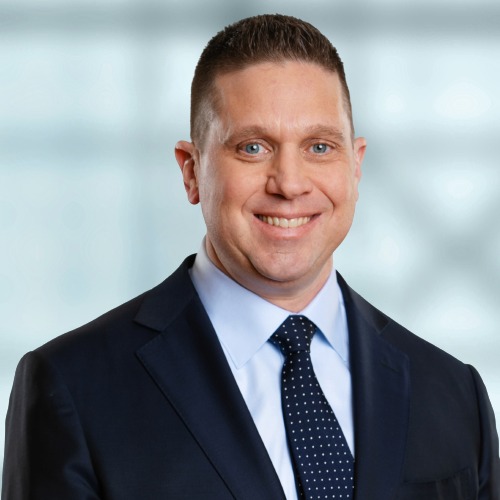


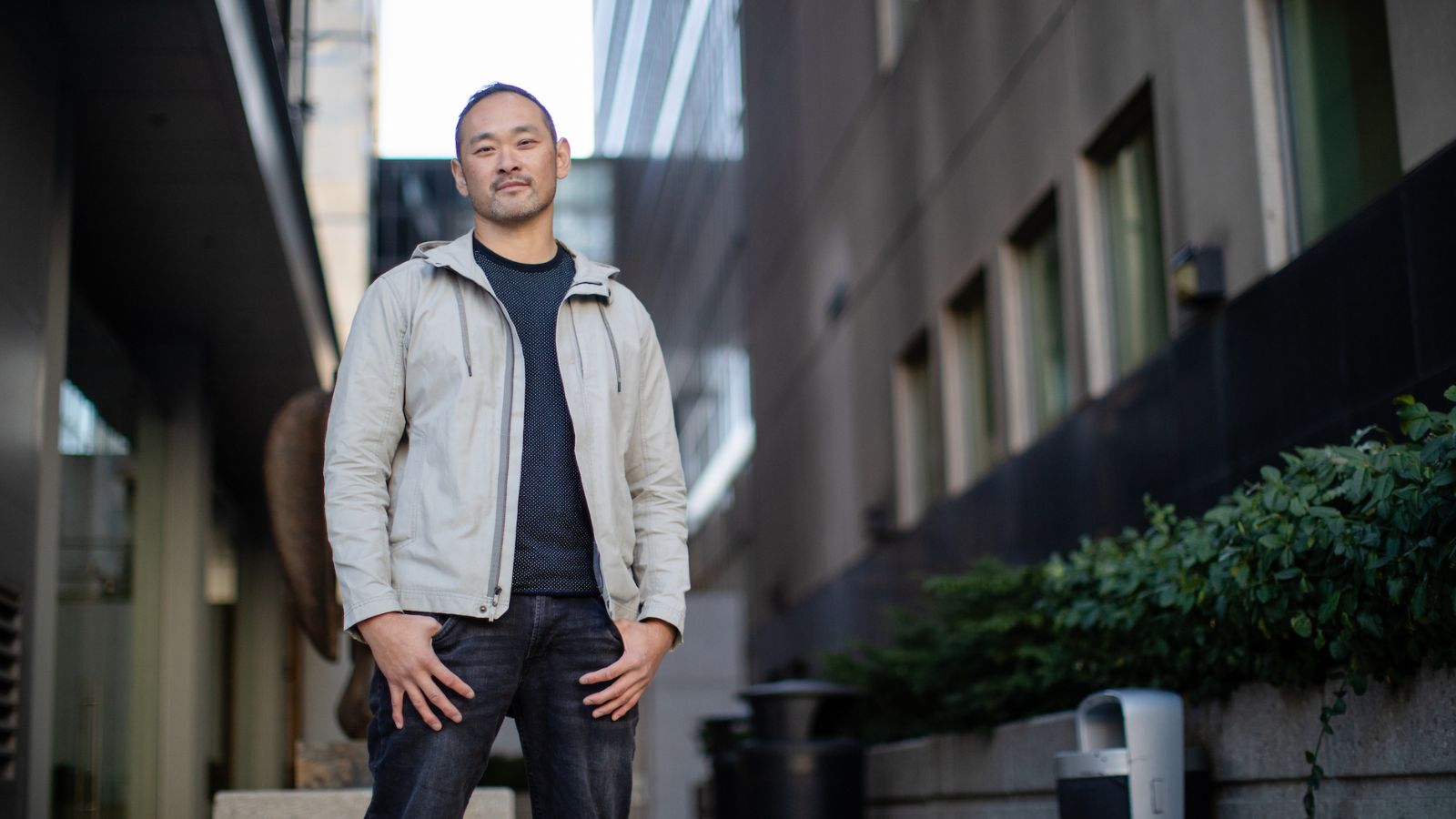
Garrick Ng, who leads the KITE Creates program, brings together creatives and researchers to help early‑stage health tech ideas grow.
The KITE Creators Circle has wrapped its third cohort, supporting innovators as they transform early-stage ideas into market-ready health technology.
The third cohort of the Creators Circle program wrapped up this month after supporting a group of creative health innovations shaped by both technical skill and lived experience. They included OT‑designed supportive undergarments for people who have had significant weight loss, and an inflatable vest that delivers a hug‑like squeeze to help calm autistic people who are overwhelmed by sensory issues.
“It was really a great pleasure—we all helped each other, brainstormed, shared ideas and got out of our comfort zones,” says Daniel Findley, cofounder of KinCapsule and one of this year’s participants.
Hosted by UHN’s KITE Research Institute under the KITE Creates umbrella, Creators Circle has supported a community of nearly 40 innovators over the past year. Many of them have continued to connect and support each other after the formal sessions ended. “Promising collaborations are emerging from this new community of disruptors, where participants are coming together to share resources and explore fresh collaborations that combine their impressive range of skills,” says Garrick Ng, KITE Creates Program Lead.
Participants included healthcare providers developing tools they’ve wished for in their clinical work, patients with lived experience eager to solve problems they’ve navigated themselves, video game designers bringing interaction design expertise to health care, and data analytics specialists grounding ideas in evidence.
For Ng, that diverse blend is the key to the program’s success. “Bringing together creatives with such deep entrepreneurial and market experience with UHN’s research communities is invaluable. It ensures these ventures bring solutions to market that are most helpful to their end users and are most likely to succeed after launch,” he says.
Here are four of the innovations that were developed and refined in the third cohort:
OT-developed base layers that support patients after weight loss
Bariatric Technologies was developed after Dr. Mary Forhan noticed her patients needed a product that didn’t exist. As an occupational therapist working with patients who had bariatric surgery, she had spent decades frustrated by the lack of foundational garments readily available for her patients.
People who lose large amounts of weight have excess tissue and skin that can be very heavy, and can contribute to mobility issues and joint pain.
“I’ve been working in this field since the early ’90s, and we were working to find a solution for patients who were really struggling with managing the extra skin and tissue after losing significant amounts of weight,” she says. “We were always modifying existing products in the market, and working creatively, and nothing really solved the problem. I kept thinking, someone’s going to come up with something. But I never thought it would be me!”
Dr. Forhan’s company, Bariatric Technologies, has developed a shoulder-to-thigh “base layer” with compression bands. It’s helpful for anyone who has lost a lot of weight, she says - whether that’s from bariatric surgery or other treatments for obesity. It’s launching on the market as a direct-to-consumer product later this year.
They’re hoping to study the product’s benefits on balance and other areas soon through partnerships with institutions such as KITE. But they’ve already had a group of testers offer feedback. “Our product testers are telling us that they feel more confident going about their day-to-day activities, because they feel more stabilized in the center of their body, so they feel less likely to trip and fall. They feel more supported, it’s taking pressure off their back and hips, and they’re standing taller.”
An inflatable vest that helps with sensory overwhelm
Industrial designers Marzuq Vohra and Vienna Doria-Pighin have come together to create a vest they describe as “a wearable hug on demand” for people with sensory issues.
The vest calms by offering deep pressure, an idea first studied by Temple Grandin and recently reached mainstream popularity with the rise of weighted blankets. The vest will detect when its wearer is stressed and inflate to provide calming pressure, then deflate once the wearer feels better. “It’s essentially calming your nervous system,” says Vohra.
It’s made from sensory-friendly fabric, lightweight, and looks similar to those from outdoor retailers. The design has won several awards, including the CBOE Canada Award for Disruptive Design and being a FIBRE SONA Vee Finalist for Innovation in Wearable Therapeutic Technologies.
The fact that the pressure will be automatically triggered is helpful for people who have difficulty with interoception—a common problem for autistic people—and might not recognize that they are becoming overstimulated, the pair said.
The two created the inflatable prototype while working with the Creators Circle, and they’re now developing the sensor, securing pre-seed funding, and testing the vest.
Both have a personal “why” behind this innovation. Vohra’s brother is autistic and non-verbal, and would be helped by something like this. Vienna herself has sensory issues and has worn the vest at conferences. “It’s been kind of a game-changer," she says. "I don’t like the noise and hubbub of conferences, and wearing this has allowed me to [be relaxed enough] to talk to people. I’ve never been able to do that before.”
AI-powered platform integrates personal memories into healthcare
KinCapsule allows people (and their families) to create and share stories about their lives through a variety of multimedia formats. It can be used for a variety of purposes, says Daniel Findlay, its cofounder, ranging from a digital memory box for people and their families to helping healthcare teams better understand their patients.
The storytelling platform, currently available to consumers and healthcare providers, allows people to add video, audio, text, documents, and pictures into the system. KinCapsule is also adding a conversational and generative AI agent to the tool (it’s currently in testing). The agent will be able to analyze content and can be a tool that a caregiver or healthcare provider can use to quickly ask questions about preferences, life experiences, and more.
“We help care teams see each resident through the lens of legacy, building confidence, enabling connection, and more meaningful personal care,” says Daniel. They’re currently studying the app's impact through a project with The Alzheimer’s Society and a project with KITE senior scientist Dr. Robin Green, which focuses on applications for an acquired and traumatic brain injury program.
They’ve also conducted pilot projects with long-term care homes, in which residents, with family members or staff, created their own KinCapsule. Those offered a stronger sense of connection between the patients and the people they worked with, says Findlay. “Families were more engaged and care teams much more deeply understand those they care for,” he says.
In those cases, the process was almost as important as the end result. “Creating this brings joy,” says Daniel. “When families or members of the care team work with residents to create this life story and legacy, it helps strengthen bonds and is a way for them to meaningfully connect.”
Neurotechnology wearable uses vagus nerve stimulation to treat mental health
Shinjni Sharma, a serial entrepreneur, was studying to become a therapist before founding Mellow Labs, a neurotechnology company focused on mental health. She is working with neuroscientists and biomedical engineers to create a wearable that stimulates the gut-brain axis.
The device, which goes around the neck and rests near the ear, can be used at home. By activating the vagus nerve, which supports the body’s "rest and digest" response, they hope to help people with depression, anxiety, and other mental health issues.
“Our focus is on a non-invasive solution that will improve mental health outcomes for long-term healing,” says Sharma. “If we’re able to do that successfully, people will be able to live better lives.”
Sharma says she knows of the importance of having more non-pharmaceutical options to help treat mental health firsthand, as she has struggled with complex PTSD and severe depression. She’s tried various treatments and found very few that worked long-term for her.
The company is in the process of finalizing the device, validating it through clinical trials at institutions like Stanford University, which they have a partnership with, before applying for Health Canada and FDA approval.