

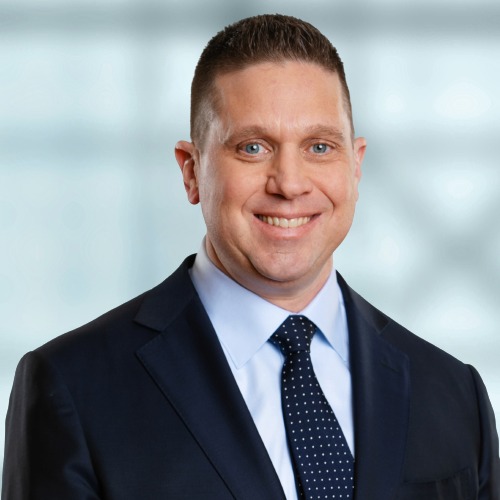


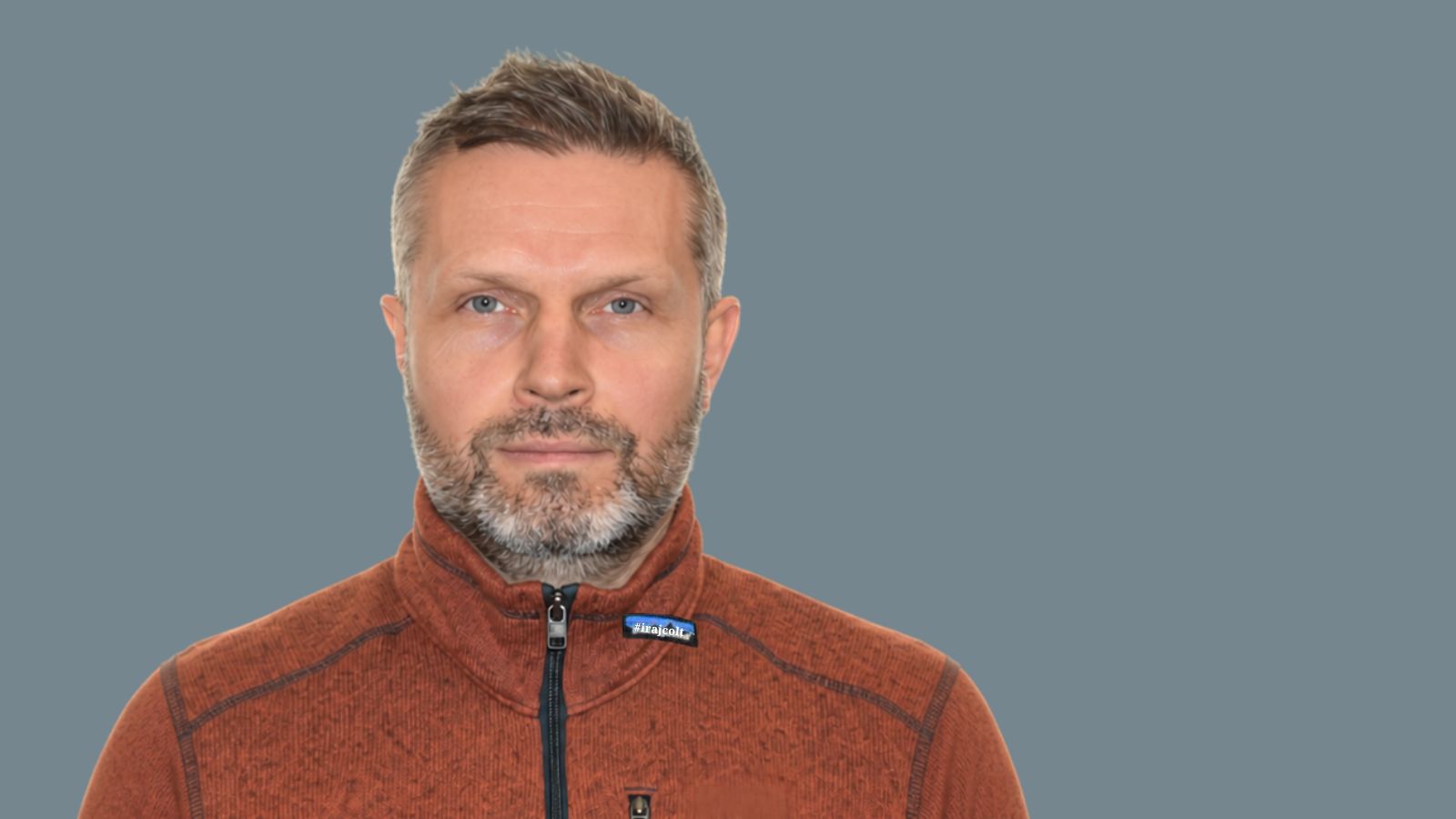
"Our study respondents told us that the culture of medicine and medical school is not psychologically safe, and prizes academic excellence above kindness and compassion," says Dr. Simpson.
KITE Affiliate Scientist Dr. Robert Simpson on rates of burnout among rehabilitation physicians and how mindful self-compassion might help.
More than 40% of Canada's rehabilitation physicians are burnt out, according to research from Dr. Robert Simpson, an affiliate scientist at UHN's KITE Research Institute and a physiatrist at UHN, and McKyla McIntyre, a physiatrist in the Brain and Spinal Cord Program at UHN's Toronto Rehabilitation Institute and wellness lead at the University of Toronto's Physical Medicine and Rehabilitation division.
In a national survey of physiatrists, they found that 42% were burnt out, 43% showed signs of moral injury, and 40% had difficulty regulating their emotions. His research was inspired by the fact that physical medicine and rehabilitation consistently rank in the top five physician specialties for burnout in the U.S.
Numbers like these, Dr. Simpson says, show that "we need to think about mental health within the healthcare workforce in a much more preemptive and organized manner."
The survey was part of a series of studies Dr. Simpson completed as a 2022 Associated Medical Services (AMS) Fellow in Compassion and AI. His other research included gauging rehab providers' reactions to a course on mindful self-compassion meant to help manage or prevent burnout. That group included doctors, but also social workers, OTs, physiotherapists and nurses.
We spoke with Dr. Simpson about where burnout begins, why rehab providers are vulnerable to it, and how mindful self-compassion might help.
Why are rehabilitation physicians in Canada at a high risk of burnout?
"I think there are some very real occupational risks around working with people with severe illness and injury, which is in many ways the bread and butter of physiatry. You're working with people who've had spinal cord injury, a stroke, multiple sclerosis, things like that—really significant, life-changing events.
"In addition to the study on rates of burnout, we conducted an exploratory study where we interviewed healthcare providers to try and get a better sense of what was happening. Physiatrists told us they felt well prepared for the physical side of managing these conditions, but they felt less well prepared for managing the emotional side of that.
"Our study respondents told us that doctors in the acute hospital settings often don't explain to the patient what the rest of their life may now look like, so the patient and the family turn up at the rehab hospital, and they might not have realistic expectations about recovery. The staff in the rehab hospital are sort of negotiating about the fact that the focus isn't a cure, but adaptation and so forth.
"There's a big mental health component to physiatry—a large proportion of the people who have these illnesses and injuries develop post-traumatic stress, anxiety, depression and that plays out in their rehab as well as because they're starting to adjust and adapt during that time. Physiatrists told us that they didn't feel that they had been trained to provide that side of care."
How does medical training contribute to physician burnout?
"To get into medicine, you have to be a very high performer, and you're used to excelling at that, but then when you come to medical school, suddenly you're in with a whole group of high performers and the pressure to perform only intensifies. I think people often go from feeling quite confident about their ability to starting to wonder if they can make the grade, so to speak.
"Our study respondents told us that the culture of medicine and medical school is not psychologically safe, and prizes academic excellence above kindness and compassion. So, instead of talking openly about their experiences and supporting each other, people internalize and think, 'Why am I struggling? This is really hard. Maybe I'm not good enough.' For some, that leads to things like shame and self-criticism.
"When it's not safe to be vulnerable, and there’s this dynamic where people are constantly comparing themselves against others and saying, 'Am I up to standards here?', that creates a cycle where if performance starts to drop off, people start to appraise themselves as not up to the mark, or even defective. That can activate shame, and it can be difficult for individuals to accept and care for themselves in this type of situation, if they never learned to do so previously, and that can lead to a downward spiral towards burnout."
What is the link between self-compassion and burnout in physicians?
"Within the culture of medicine, right from early medical training, compassion is a word that you're taught about, but it's kind of a soft, non-technical skill, and there's a sense that you don't really have to do it to succeed.
"One of the most striking descriptions we had from interviewees was when we were asking about training in compassion was someone responding by saying, that’s the antithesis of medicine.
"In addition, our survey research suggested that people were more likely to be burnt out when they worked in an environment where they perceived compassion to be low. When we asked them about compassion, their levels of compassion were lowest in relation to themselves, so we thought there was something interesting there."
Why use mindful self-compassion training to try to help address physician burnout?
"We knew that the self-compassion scores were low and that this was linked to shame and self-criticism, so we wanted to look at something designed to improve self-compassion. There was data from our survey suggesting that people were ashamed of their emotions, especially when they didn't feel like they were performing well. The self-compassion approach was developed as an intervention for self-criticism and shame, so it seemed like a good fit.
"The course that we used was called Self-Compassion for Healthcare Communities. It's a version of mindful self-compassion that has been adapted for busy healthcare providers and includes dimensions that focus on one’s relationship to oneself and on one’s relationship with others. But it had never been studied in rehab.
"I had also personally completed a fellowship in compassion-focused therapy a year or two before. I found it very helpful, and I think I’m still learning from it. So self-compassion is a topic that overlaps between my work life and my research life."
How can healthcare providers practise self-compassion day to day?
"I would say it’s about self-awareness, self-monitoring and self-care. You develop a habit of attending to yourself in a kind and curious way, noticing that you’re thinking, noticing that you’re feeling, noticing how you’re acting, but you’re not elaborating with a story. You’re just watching it.
"If you notice that you’ve become a bit more activated, you might then say, “Right, I’m going to respond to myself in a way that soothes this feeling" and I might do a breathing practice or something like that to help me relax my nervous system."
Can self-compassion training reduce burnout in rehabilitation providers?
"Our study found that people liked it—they found it was acceptable and relevant. There is a tantalizing suggestion that this might be a good approach to take forward. But it's a small study; we need to test it in a large trial before we can say anything about effectiveness.
"The people who participated said they developed skills that they use personally, with patients and with colleagues. One of the most striking findings was this idea that everyone's suffering in isolation, but then when people start to become more aware of what's going on, they start recognizing what their patients and colleagues are going through too, and so they start to extend the hand of compassion more freely."
Was it hard to get physicians to OPEN UP about burnout?
"I think there's a lot of stigma around burnout, and a lot of people said to me, 'No one will admit to you they've got burnout. You won't get any interviewees. You won't get people doing the survey.' And I would say it was quite the opposite.
"I think being a credible insider gave me some privilege to be able to access and speak to people in physiatry and specialist rehab, and I really want to honour that. But I also think that people are already well aware there is a big issue with burnout and recognize that something needs to be done about this now.
"Courses like this could be part of the solution, but they're not going to solve the problem on their own. We also need organizations, institutions, and culture to change. If it all remains a personal problem—invisible—then no one else has to take responsibility for it except the individual. I think that is morally wrong because arguably, for many, burnout wouldn't have happened without the occupational exposure to stress. We wouldn't expose people at work to harmful chemicals, for example, knowing there's a health hazard associated with them. So, we need to extend our thinking about occupational health to the psychological and emotional realms, too.
"But the good news is, I think burnout is now squarely on the agenda. We’re at a stage where we’re discussing it, and people acknowledge it, and that’s healthy. We can leverage this. I think we're going in the right direction."
This interview has been condensed for length and clarity.