




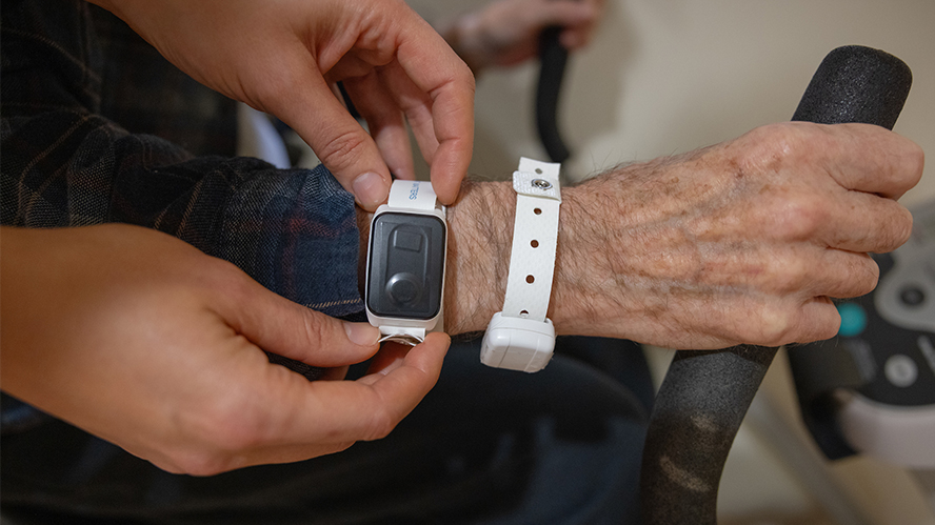
Real-time location system technology is increasingly used in dementia units to help locate residents and monitor wandering. These systems provide continuous location data that can offer valuable insight into residents’ activity patterns during the day and at night.
Real-time location systems reveal sleep and activity patterns to support better dementia care.
Disturbances in sleep and daily activity patterns can lead to safety risks and declining well-being for people living with dementia. However, clinicians lack practical tools to monitor these changes over time. Researchers at UHN’s KITE Research Institute (KITE) found that routinely collecting safety data from wearable, real-time location systems (RTLS) can be used to monitor daily activity and sleep to support people living with dementia.
In this study, led by KITE graduate student Yasser Karam, 47 residents of a specialized dementia care unit wore RTLS bracelets that tracked their movements for an average of nine weeks. The research team analyzed this data to calculate how much participants moved, how regular their daily activity was, and how much time they spent in bed. These digital markers were then analyzed by machine learning models to group participants into six distinct categories, ranging from well-regulated daily activity to severe disturbances.
To read the full story, go to UHN Research News.