




Dr. Alison Novak is the senior author on a new study on how intersection design affect the safety and mobility of people with disabilities.
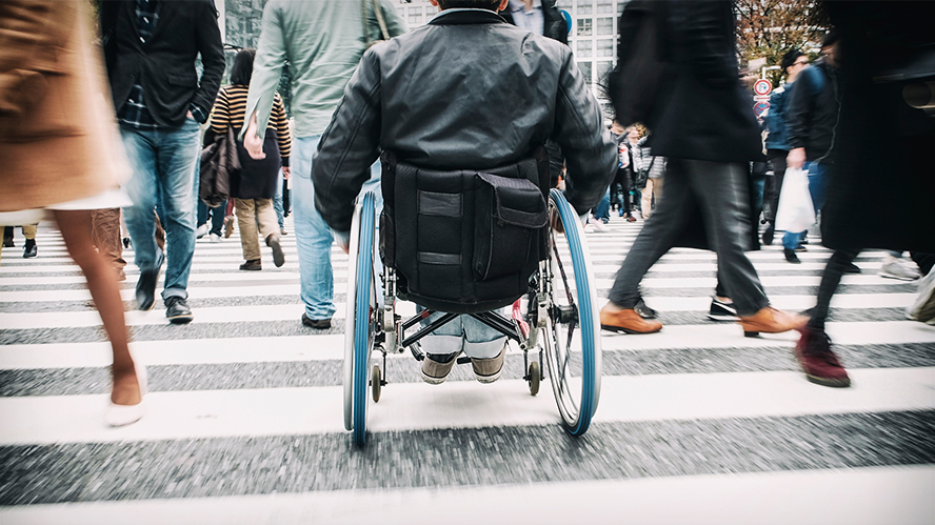
Navigating street intersections can be an everyday challenge for people with disabilities, affecting their safety, confidence, and ability to move independently through their communities. Researchers at UHN’s KITE Research Institute found that accessible streets require intentional design, ongoing maintenance, and engagement with people with disabilities in their design and evaluation.
Urban planning strategies such as the Complete Streets approach aim to make streets more accessible by considering the different and competing roles of all road users, including pedestrians, cyclists, transit users, drivers, and people of varying ages and abilities. Despite the growing use of this approach, the perspectives of people with disabilities have been underrepresented in evaluating these designs, limiting the understanding of how well they meet the needs of their intended users.
To address this gap, the research team explored the experiences of 24 people with mobility, visual, or hearing disabilities as they crossed two busy urban intersections in downtown Toronto that were designed using the Complete Streets approach. Participants completed four sets of crossings and shared which design elements helped or hindered their ability to cross safely and comfortably.
Read the full story at https://www.uhnresearch.ca/news/10-09-2026/designing-with-intention