




KITE Research Rounds: Novel approaches to treatment and monitoring of Parkinson’s Disease
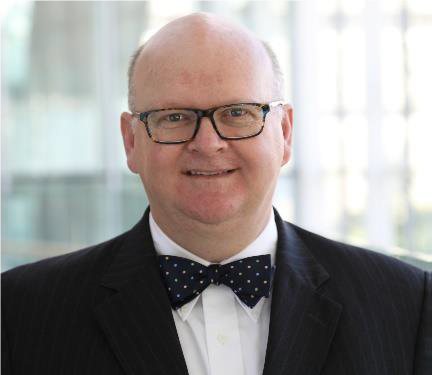
Speaker: Dr. Martin McKeown
Abstract
Biography
Dr. McKeown is the John Nichol Chair in Parkinson’s Research, Professor in the Department of Medicine, and adjunct professor in the Department of Electrical and Computer Engineering at the University of British Columbia (UBC), Canada. The PPRC is deemed an International Centre of Excellence by the (US-based) Parkinson’s Foundation. He did his Engineering Physics, Medicine and Neurology training at McMaster University, the University of Toronto, and the University of Western Ontario, respectively. He did a 3yr research fellowship at the Computational Neurobiology Laboratory at the Salk Institute for Biological Studies in San Diego before being hired as an Assistant Professor of Medicine and Biomedical Engineering at Duke University. He was recruited to UBC in 2003.
He has been Principal Investigator for a variety of peer-reviewed research projects funded through the National Institute of Health (US-NIH), the Parkinson's Foundation (US-PF), the Canadian Foundation for Innovation (CFI), the Natural Sciences and Engineering Research Council of Canada (NSERC), the Canadian Institutes of Health Research (CIHR), the International Association of Translational Neuroscience, and the (US) Whitaker Foundation. He was a member of the Neuroscience A (NSA) Canadian CIHR Scientific peer review committee as well as a member of the Scientific Advisory Board of the Parkinson’s Society of Canada. Dr. McKeown has authored over 200 peer-reviewed papers and book chapters.
He is currently the Medical Advisor to the Parkinson’s Society of BC, and Chair, Research and Clinical Advisory Committee, Parkinson Canada. In addition to his clinical management of Parkinson’s Disease, his research interests include privacy-compliant video monitoring technologies for Parkinson’s disease and non-invasive neuromodulation as a novel treatment for Parkinson’s disease.